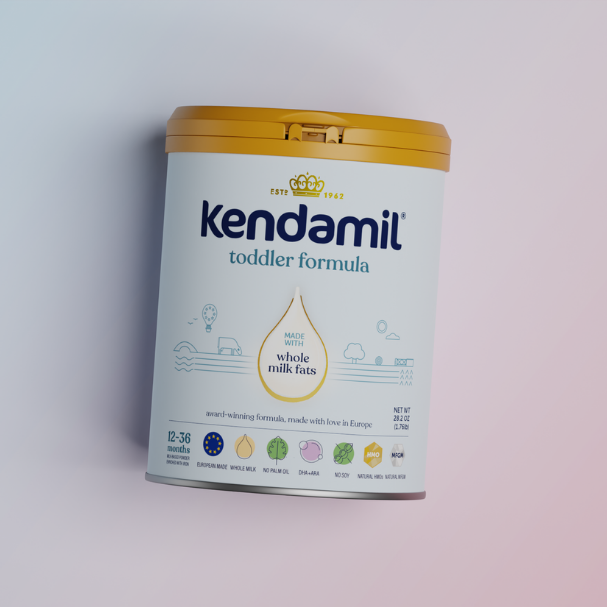


When unexpected formula news affects your family, changing your baby’s usual routine can feel overwhelming. You may be wondering which formula to choose, whether you need to make the switch gradually, and what changes you might notice along the way.
First, take a breath. Changing formulas is common, and babies can safely transition from one formula to another. Whether you need to switch immediately or have time to make the change gradually, we’re here to help make the process feel a little simpler.
We understand how concerning the formula news has been for parents and caregivers. If you need to switch your baby’s formula, please rest assured that Kendamil is not affected by the ongoing Nara Organics recall. Our formulas remain safe to use and available across the country.
To support families through this change, we’ve created a clear, step-by-step guide explaining what to expect and how to make the switch as smoothly as possible.
Switching to Kendamil: Where to Begin
Changing formulas can feel daunting, but sometimes it’s necessary. Your baby’s usual formula may be unavailable, recalled, or no longer the right choice for your family.
Depending on the situation, you can transition in one of two ways:
- An immediate, or “cold turkey,” switch, which is only recommended in times of an emergency (such as a recall).
- A gradual transition over several days, the recommended method to help ease baby's transition.
There is no single “right” way to change formulas. Some families prefer to introduce a new formula slowly, while others begin using it straight away. Both methods are safe, and the best option will depend on your baby’s needs and the reason you are switching.
In an emergency, such as a formula recall, your first priority should always be to stop using the affected product and follow the recall instructions provided by the manufacturer and relevant health authorities.
What to Expect When Switching Formulas
Every formula has its own recipe and ingredient blend. While infant formulas are designed to provide the nutrition babies need, differences between formulas may mean that your baby’s digestive system needs time to adjust.
During the first 7-14 days after switching, it is likely you will notice:
- Changes in poop color, consistency, or frequency
- More gas or spit-up than usual
- Fussiness during or after feeds
Please rest assured these changes are normal and usually settle within 7–14 days as your baby’s tummy becomes familiar with the new formula.
Some babies may barely seem to notice the change. Others need more time. Babies do have a remarkable ability to keep us guessing.
Try to give your baby time to settle into their new feeding routine while keeping preparation methods, bottle sizes, and feeding times as consistent as possible.
It may also be helpful to keep a simple record of feeds, diapers, spit-up, and your baby’s mood. This can make it easier to spot patterns and share clear information with your pediatrician if you have any concerns.
When to Speak With Your Pediatrician
Temporary digestive changes are expected when changing formulas. However, you know your baby best.
Speak with your pediatrician if you are concerned about your baby’s symptoms, if your baby appears unwell, or if changes do not begin to settle after the usual adjustment period. You should also seek medical advice before choosing a new formula if your baby has a diagnosed allergy, a medical condition, or specific nutritional requirements.
Your pediatrician can help you determine which type of formula is most appropriate for your little one.
Switching Formula “Cold Turkey”
If your baby’s formula has been recalled, stop using it immediately and begin feeding with Kendamil right away.
There is no need to continue using a recalled formula simply to complete a gradual transition. In this situation, an immediate switch is the appropriate approach.
Prepare each Kendamil bottle exactly as directed on the can, using water boiled and cooled to at least 158°F (70°C) for safe feeding. Always use the scoop provided inside your Kendamil can and follow the stated water-to-powder measurements carefully.
Do not use the scoop or preparation instructions from your previous formula, as scoop sizes and mixing directions can vary between brands.
Once prepared, cool the bottle to a safe feeding temperature before offering it to your baby. Check the temperature before feeding and discard any unfinished formula according to the instructions on the can.
Your baby may notice that the new formula smells, tastes, or feels slightly different. That does not necessarily mean they will not accept it. Some babies adjust from the very first bottle, while others may take a few feeds to become familiar with something new.
A Gradual Formula Transition
When there is no safety reason to stop your current formula immediately, the recommendation is to transition gradually.
A gradual transition introduces the new formula over several days while slowly reducing the number of bottles made with the previous formula. This can give your baby time to become familiar with the new taste and feeding routine.

The transition chart should be used as a general guide rather than a strict rule. Every baby is different, and you can adjust the pace based on how your little one responds.
When following a gradual transition, prepare each formula separately and exactly according to the instructions on its own can. Rather than combining two formula powders in the same bottle, offer separate bottles of the old and new formulas throughout the day according to your transition plan.
This helps ensure that each bottle contains the correct balance of water and formula powder.
Can You Mix Two Formulas in the Same Bottle?
Avoid mixing two different formulas in the same bottle.
Formula brands can have different scoop sizes, powder-to-water ratios, and preparation instructions. Combining them may make it difficult to prepare the bottle accurately.
Instead, prepare each formula separately according to its label and gradually replace bottles of the previous formula with bottles of Kendamil.
You can mix breast milk with prepared formula if that is part of your feeding journey. Always prepare the formula correctly with water first, following the instructions on the can, before combining it with breast milk. Formula powder should not be used as a substitute for the measured water required during preparation.
Breast, bottle, or both—it’s all part of feeding your baby in the way that works for your family.
Helping Your Baby Adjust
A few simple habits can help make the transition feel more familiar:
Keep your baby’s usual bottle, feeding position, and routine wherever possible. Introducing one change at a time may help the new formula feel less unfamiliar.
Continue to follow your baby’s hunger and fullness cues rather than encouraging them to finish more than they want. Their appetite may vary slightly while they adjust.
Most importantly, be patient with yourself as well as your baby. An unexpected formula change was probably not on your parenting schedule. Then again, babies are not particularly known for respecting schedules.
You Don’t Have to Navigate the Switch Alone
Behind every tin of Kendamil is a team of parents, caregivers, and nutrition experts who care deeply about the families we serve. We’re here to help you feel supported and confident with every feed.
Our Customer Care team will be happy to offer personalized guidance and help you understand the options available within the Kendamil range.
How to Reach Us
Send us a direct message on social media at @kendamil.usa
Email us at enquiries@kendamil.com
Message us on WhatsApp at +44 15394 80002
Changing your baby’s formula in an emergency can feel like a big decision made under difficult circumstances. But with clear preparation instructions, a little time to adjust, and support when you need it, the transition can be reassuringly simple.